The Power of Narrative Language in Documentary Filmmaking — Selected examples
Stories created from scratch on an equal footing with fiction, collages of time fragments; juggling formats, frame widths, film colors; building bridges between the past and the present, searching for the truth about people, society, and eras. Documentary filmmakers continue to surprise us, filtering stories already told by fate through their own sensibilities and needs. Here are a few of this year’s titles that seduce us with their creativity, freshness, and courage, all of which are both narrative and formal.
© Olivier Sarbil / Protozoa Pictures / Impact Partners / Time Studios / Real Lava / Newen Studios
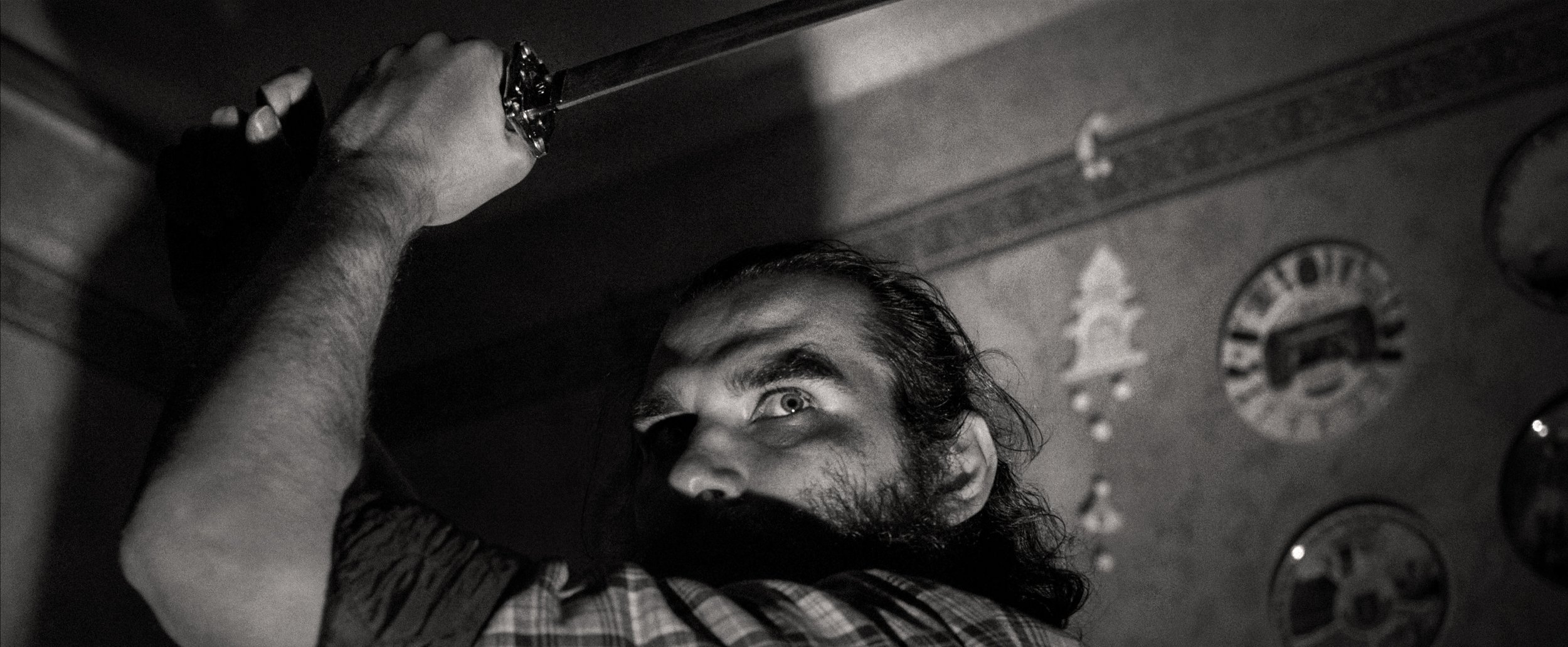
A documentary with a taste of fiction? Olivier Sarbil, an award-winning cinematographer from France, proves that the line between these two genres depends solely on imagination and skill. His feature-length directorial debut, Viktor, is a story of loneliness within a crowd and of double exclusion. It’s a tale of a deaf man who, in the midst of a conflict in Ukraine, his homeland, wants to fight the aggressor. However, his disability prevents him from being on the front lines. We therefore observe an inner journey – a search for a place for oneself in the chaos. It’s also a journey through the topography of war, landscapes of destruction and bleeding soil. What we’ll not find here, however, is journalism typical of the cinema dealing with current events, nor will we experience emotional blackmail. Viktor is above all a universal portrait of a man transforming the reality around him not only in order to survive inhumane times, but also to find meaning in life. Sarbil, who is also the cinematographer, gives the images fictional plasticity, allowing them to become the organic engine of the narrative. His shots are carefully studied and polished to the smallest detail. They deserve special attention, considering that he shot the film entirely on his own, without the help of a camera crew. The film’s fictional flavor is also enhanced by the sound designed by Peter Albrechtsen and an Oscar winner, Nicolas Becker.
Myrid Carten also uses a distinctive visual language, but a completely different methodology in her feature debut, A Want in Her. She depicts her mother’s alcoholism with anxious, claustrophobic and shaky shots that reflect the unstable reality surrounding her. One that’s devoid of any foundations – material, emotional or relational. She adapts archival footage from her childhood – memories from a time that should have been safe – to present events, searching for answers to questions about her own identity, sense of meaning and perhaps even happiness. On one hand, we get the portrait of a dysfunctional home, as well as the baggage adult children of alcoholics have to deal with, and on the other – a kind of self-therapy in which images help transform reality in order to understand the past, take care of the inner child and tame the future.
The film duo of visual artists, Magda Hueckel and her partner, director, editor, and screenwriter, Tomasz Śliwiński, treats audiovisual material in a similarly therapeutic way. Their joint project, Kompleta, is an intimate record of a borderline experience – the artist’s confrontation with cancer. Faced with the fragility of human life, she turns to art using it in an attempt to tame death and come to terms with mortality. Art is meant to be the proof of struggle and survival. The trance-like nature of the film helps convey the anxiety that comes from contemplating life as an unknown. However, the solemnity does not turn into pathos or become cliché. The creators do not moralize, they do not usurp the right to lecture on the meaning of existence, but only to seek it vividly. They dress their story in an unconventional, consistent and, above all, original narrative style, which grew out of the main character’s work.
When talking about distinctive and original narrative language, as well as creative courage, one cannot overlook the film Zodiac Killer Project. Its author, Charlie Shackleton, a British filmmaker and multimedia artist, is first and foremost a cinephile who loves audiovisual material. Therefore, when tackling the subject of a serial killer nicknamed Zodiac, he does not simply recount the facts or measure events with a ruler. Instead, he serves up a hybrid of “true crime” and “slow cinema”. In laminated frames and understatements, he searches for things invisible to the naked eye – perhaps invented, perhaps blurred by time – thus leaning over what lies between the lines in the film material and between words and images. Béla Tarr claimed that the essence of film lies in images, light, and music, and that the story itself is compensatory, even deceptive. Shackleton seems to fit perfectly into the Hungarian master’s credo. Its unhurried narrative, an impressionistic landscape, is uncompromising, not bowing to the expectations and habits of viewers, thus constituting the definition of true art.
In contrast to creating something from scratch lies work based on archives, which is one of the most interesting narrative forms in documentaries. While Olivier Sarbil polished every shot in Viktor, Palestinian director Kamal Aljafari took a completely different approach in his latest work, With Hasan in Gaza. His film is a kind of journey through time – a return to the twenty-year-old images recorded during his stay in Palestine. However, the director refrains from searching through the archives for images that would appeal to contemporary viewers – he is not interested in eye-catching shots. Instead, he looks at the people captured on film. He does not place one character at the epicenter, but treats each person captured by the camera equally, which gives the image an anthropological dimension. He feeds the viewer with the topography of Palestine, paying tribute to the land, society and culture. He almost completely abandons editing and dynamic transitions, resisting the temptation to turn his cinema into a product. His creative courage to construct a narrative without visual fireworks, yet one that holds the viewer’s attention, is what seduces us most here. Although his film is a letter from two decades ago, it says more about the present than we would like to see.
© Drygas Film Production
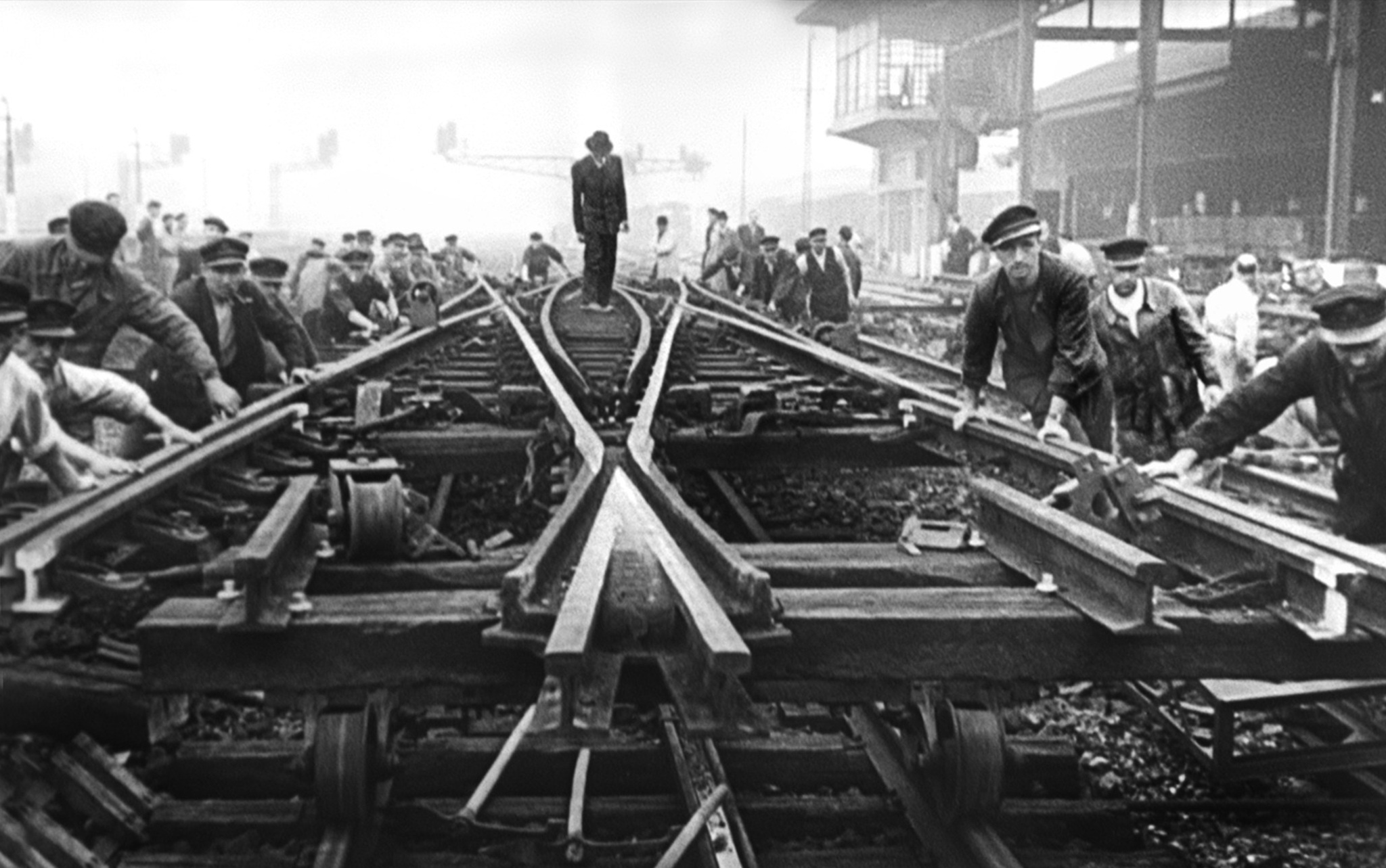
Among Polish artists, Maciej Drygas proved to be this year’s master of archival work with his video essay Trains (Pociagi). The director searches through a wealth of audiovisual material for an essence that he can transform and give new meaning to. He deconstructs the connections and contrasts he finds, juggling the afterimages of the past – and he does so with the lightness of a child fascinated by the discovery and the maturity of a wise man who has learned the secrets of the universe. Although he places the titular trains at the center of the story, like Aljafari, he creates an anthropological picture, describing man in the context of one of the most important inventions in history. He does not resort to additional voice-over narration, completely trusting the viewer’s intelligence and giving them space to interpret the image and sound. Like Sarbil, he is extremely precise and perfect in his work – each shot has its place and time, there is no room for chance here. It is craftsmanship at the highest level, working on cognitive, emotional, and aesthetic plains. Alongside last year’s Solaris, Mon Amour directed by Kuba Mikurda, it is one of the most important Polish films of recent years which used archives to tell an original story.
Agnieszka Pilacińska
j:mag Tous droits réservés
