Mostra 2026: Are Impossible Loves Possible?
The 83rd Venice Film Festival came to a close from September 2 to 12 — an edition in which Woman Unknown by May El-Toukhy took the Golden Lion, Mathilde Arcel won Best Actress for the same film, and John Malkovich was named Best Actor for Wild Horse Nine. But for me, one of this edition’s most significant events lay elsewhere: in the return of a filmmaker who hadn’t made a film in eight years, and whose name alone — even before we’d seen his new film — could change the rhythm of a cinephile’s steps around the festival: Lee Chang-dong.
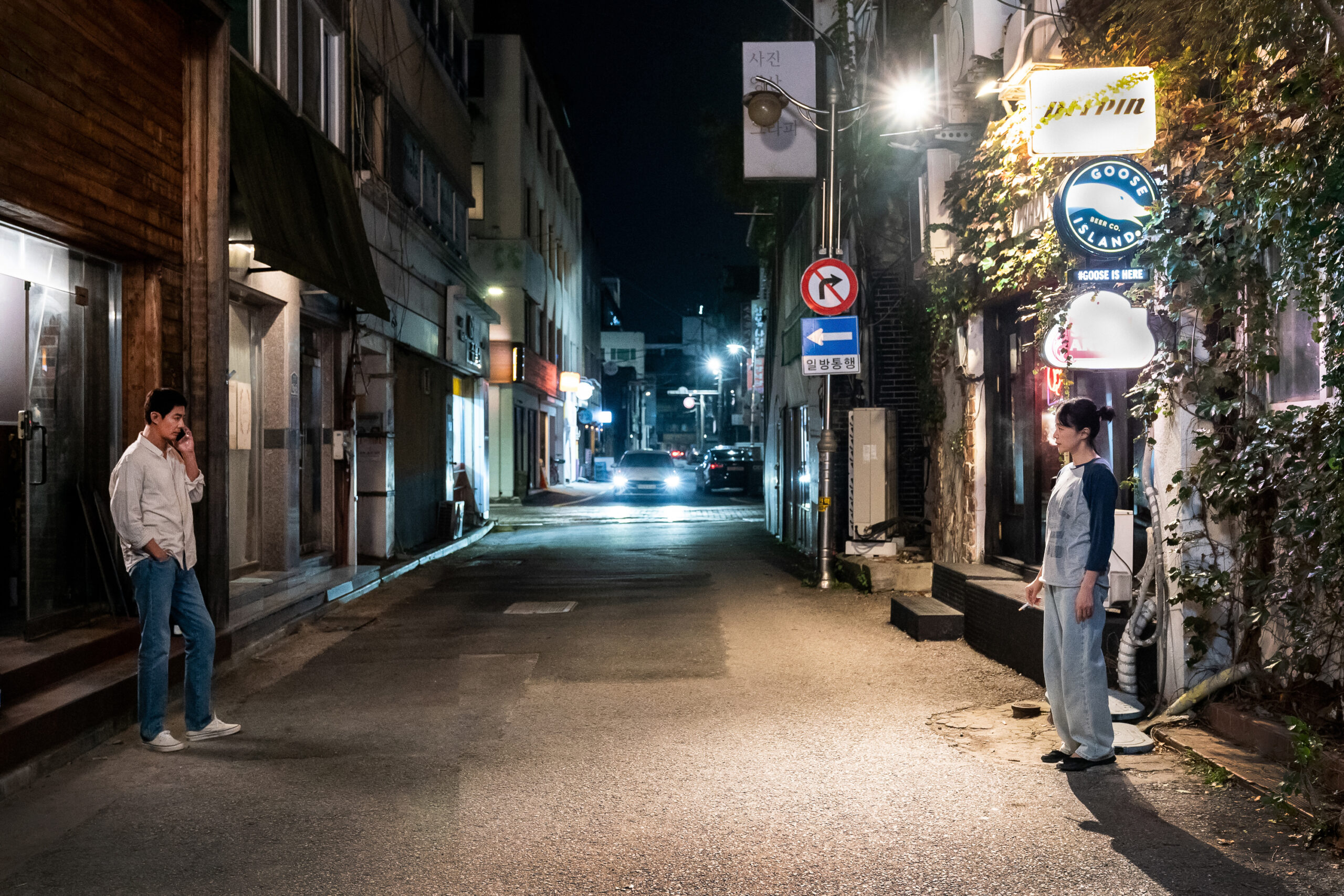
Cr. Joo Jae-bum/Netflix © 2026
Lee Chang-dong belongs to that rare breed of filmmaker whose infrequency, unlike most absences, doesn’t lead to being forgotten — on the contrary, it heightens anticipation. In this sense, perhaps he belongs alongside directors like Andrei Zvyagintsev: filmmakers for whom, for a segment of cinephiles and critics, simply seeing their new film is itself an event. The film doesn’t even need to have started. The title on the program is enough. You already know you have to see it.
For me, this was one of the reasons for going to Venice — not just the festival itself, not just friends and colleagues I hadn’t seen in years, but this curiosity: what would Lee Chang-dong do with today’s cinema after eight years?
Nearly a decade earlier, Burning had created a similar anticipation at Cannes; the film screened in the main competition, drew critical acclaim, and achieved the highest score in the history of Screen International’s critics’ poll up to that point. It wasn’t among the jury’s main awards, but it won the FIPRESCI Prize. Perhaps one reason Burning stayed so vividly in cinephiles’ memory was that it never handed anything to the viewer easily; love, jealousy, social class, loneliness, desire and violence became a psychological puzzle in the film — a puzzle that, every time we thought we were close to an answer, slipped from our grasp again.
I later saw the poster for Burning in the homes of many cinephile friends. Some films don’t remain in our memory only as films; they live on in the homes where we watched them, in the people we talked about them with, and in the years that have passed since. Burning was one of those films for me.
Now Lee Chang-dong had returned after eight years with Possible Love — and this time, there’s no talk of physical burning. His camera, with a strange and singular delicacy, renders the flames of a doomed love in the shape of a quadrilateral; as if each side of this shape is, imperceptibly, on fire. But this time we don’t know exactly what’s burning, and we don’t even know between whom this love might be possible.
The film opens with what seems like an idle wandering, one that gradually becomes the drama’s true engine. A documentary filmmaker enters the life of a couple whose economic and social standing is markedly different from his own and his wife’s; his camera is meant to capture the lives of laid-off workers and people living on the margins of today’s economic order. But gradually, the camera itself shifts from an instrument of recording reality into one of the film’s invisible characters.
Here Lee Chang-dong looks at this situation from two positions at once: as a screenwriter constructing the drama’s architecture, and as a director who knows that once a camera enters people’s lives, it doesn’t merely observe — it changes their relationships too. A film within the film takes shape: the documentarian wants to record other people’s lives, but ends up entering that life himself. The line between observer and observed gradually blurs; what was supposed to be the film’s subject becomes a relationship, and the relationship, in turn, gradually becomes drama.
Two couples sit at the center of this world, but Lee Chang-dong doesn’t confine them to a closed square. Each side is connected to the others, and every movement by one shifts the balance of another; love, friendship, desire, jealousy, class and loneliness constantly trade places. Every closeness creates a new distance, and every distance opens up the possibility of a different kind of closeness.
Amid all this, social class isn’t just background — it’s part of the drama itself. People who don’t live at the same economic level don’t necessarily share the same emotional world; one has lost his job, another is wealthy; one wants to document the lives of the underprivileged, the other belongs to the very class the camera has come to document. It’s precisely in these gaps that relationships form, shift, and sometimes spin out of control.
Even the presence of a child, and a trip into nature, creates a brief moment of possible connection within this structure — a space where, for a while, the pressure of daily life recedes and human relationships take on a different shape. Perhaps it’s these small moments that pull the notion of the « possible » out from the heart of everything impossible.
Perhaps the film’s title is deliberately a question rather than an answer: is love possible? But if love has to pass through class, the past, desire, friendship, loneliness, and the gaze of another — can it still be possible? Lee Chang-dong offers no clear answer; the narrative reveals the characters’ pasts and their relations to one another gently — not to explain everything, but to change how we see them. Every time we think we’ve recognized one side of this quadrilateral, another side reveals itself.
Still, for me, Possible Love doesn’t shine as brightly as Burning. Burning set an expectation for Lee Chang-dong that wasn’t easy to return to; that film had a kind of mystery and elusiveness that kept working in the mind even after it ended. Possible Love has a clearer structure and leans more toward relationships, class, and human dynamics. But perhaps this very difference shows that Lee Chang-dong never intended to make another Burning — a great filmmaker doesn’t always have to repeat his own earlier film.
In the end, Possible Love is a film about people who live alongside one another without necessarily knowing each other; people who might grow close, drift apart, and just when we think we’ve understood a relationship, another side of it comes into view. If love takes shape in a world where class, the past, desire and misunderstanding keep pushing it toward the impossible, what is it that keeps it possible?
At Cannes in 2018, he won the FIPRESCI Prize. This year in Venice, he won that same prize in competition once again, and alongside it took the Silver Lion — the Grand Jury Prize — one rung below the Golden Lion. The Silver Lion for Best Director went to Ilya Khrzhanovsky for DAU. It’s as if an invisible line runs between Burning and Possible Love, stretching from Cannes to Venice, showing that Lee Chang-dong’s relationship with critics, at least across the span between these two films, still holds.
And now the film has traveled from Venice to Toronto, and continues on its way to Zurich; Possible Love is on the program of the 22nd Zurich Film Festival, running September 24 to October 4 — a film that, after Venice and Toronto, remains in orbit among the major festivals.
Perhaps this is exactly what happens with certain filmmakers who work rarely: when they return, they don’t just bring a new film with them — they bring the weight of years of waiting too.
And perhaps this is exactly why impossible loves, in Lee Chang-dong’s world, still remain possible. Burning is over — but its fire hasn’t gone out yet; and perhaps Possible Love is Lee Chang-dong’s attempt to look closely at what remains after the fire has died down.
Majid Movasseghi
j:mag Tous droits réservés
