Berlinale 2026 — Competition: Witnessing Violence — Josephine and the Moral Tension of Berlinale
The 76th Berlin International Film Festival (Berlinale) unfolded this year with a sense of recalibration. After several editions that many critics described as uneven, the festival—now under the leadership of Tricia Tuttle, formerly the director of the BFI London Film Festival — seemed to regain a clearer curatorial direction. The competition program brought together a wide range of cinematic voices, perspectives, and aesthetic approaches. While the Berlinale has always maintained a strong commitment to politically engaged cinema, this year’s selection appeared to strive for a better balance between political themes and cinematic craft.
The international jury, chaired by Wim Wenders, evaluated more than twenty films in competition. Watching the entire slate—as I did this year—inevitably reveals a familiar pattern. Alongside films of genuine artistic accomplishment, there are always works whose presence seems shaped as much by their political relevance as by their aesthetic achievements. This dynamic is not unique to Berlin; it is part of the ecology of most major international film festivals.
Historically, the Berlinale has embraced politically charged cinema more openly than many other festivals. Films addressing war, migration, gender violence, and human rights frequently dominate the program. In some cases, a film’s selection appears motivated less by formal innovation than by the urgency of its social or political subtext. Iranian cinema, for instance, has often been discussed within this framework, where political context inevitably becomes part of the way a film is received and interpreted on the international festival circuit.
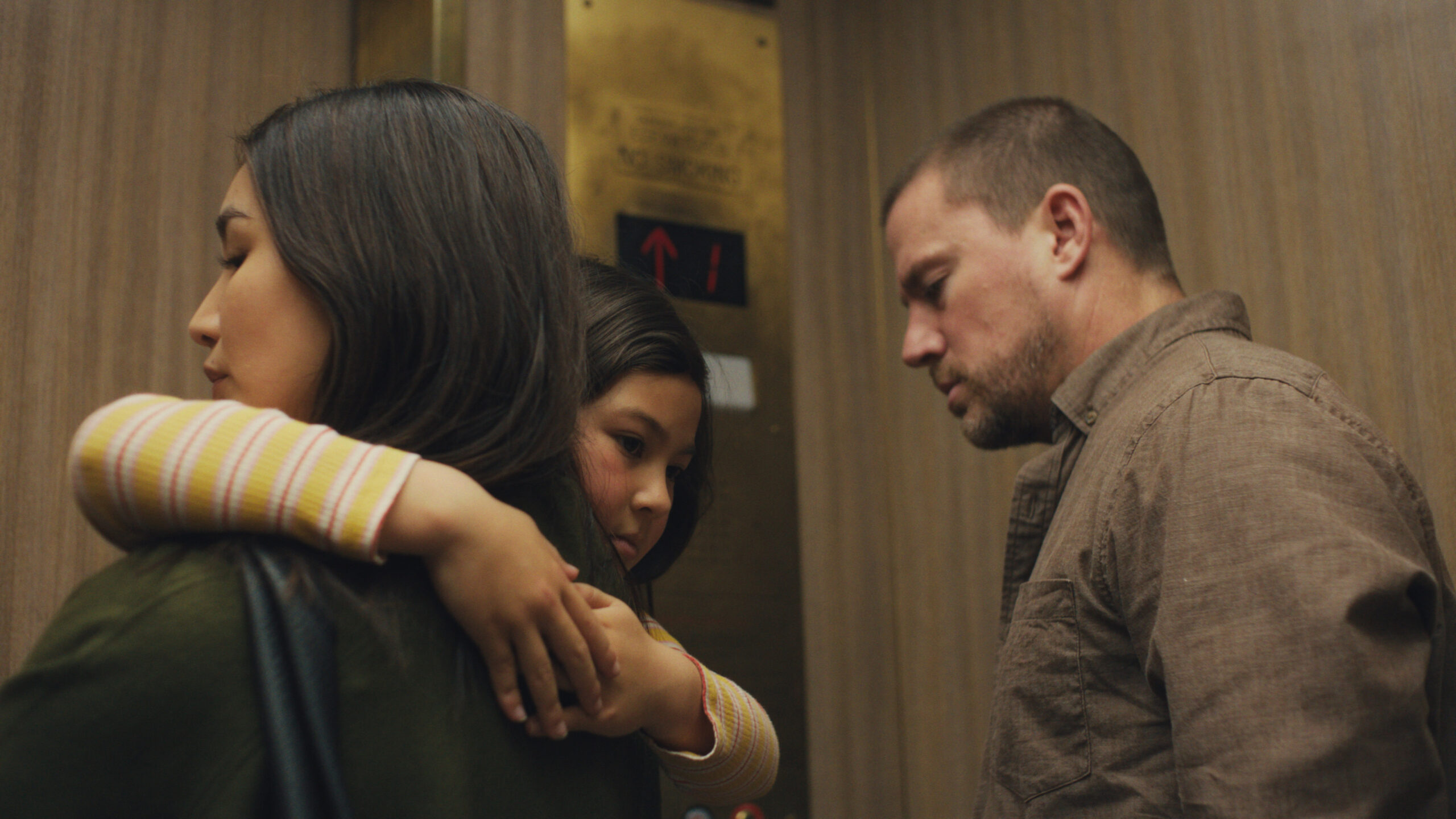
© Josephine Film Holdings LLC
Yet within such a broad and sometimes uneven landscape, certain films manage to rise above the noise. One of the most striking experiences in the Berlinale 2026 competition was Josephine, directed by Beth de Araújo.
In recent years, the Berlinale has quietly developed a pattern of including at least one prominent title that premiered earlier at the Sundance Film Festival. In 2026, that film was Josephine. The film had already made a strong impression in Park City, where it won both the Grand Jury Prize and the Audience Award in the U.S. Dramatic Competition—an uncommon double victory that immediately positioned it as one of the most talked-about independent films of the year.
Written and directed by Beth de Araújo, whose previous feature Soft & Quiet (2022) attracted critical attention for its unsettling examination of social violence, Josephine continues the filmmaker’s interest in the psychological roots of brutality. The film stars Gemma Chan, Channing Tatum, and newcomer Mason Reeves, whose performance as the young protagonist anchors the film emotionally.
Because the film had already premiered at Sundance, its screening in Berlin was technically not a world premiere. In the competitive ecosystem of international festivals, such distinctions matter. While the Berlinale welcomed the film enthusiastically, Josephine could not be framed as a discovery belonging exclusively to the festival.
The film opens with a deceptively calm moment. A young girl named Josephine runs through a park with her father, who is jogging. The scene is simple and ordinary, establishing a sense of everyday normalcy. Within minutes, however, the atmosphere shifts dramatically.
Josephine—only seven or eight years old—witnesses a violent assault. A man attacks a woman who has just emerged from a public restroom in the park. This moment functions as the inciting incident of the narrative, setting the entire drama in motion.
From that point onward the film moves into the territory of a psychological and legal drama. Josephine becomes the only eyewitness to the crime and is drawn into a complex legal process involving prosecutors, defense attorneys, and courtroom testimony. Yet the film’s true focus is not the crime itself but the emotional consequences of witnessing violence at such a young age.
One of the most notable strengths of Josephine lies in its narrative precision. The story follows a classical dramatic structure while maintaining a steady sense of suspense. The narrative begins in equilibrium—a normal day in a park. The violent incident disrupts that balance, plunging the story into instability. From there, the plot moves toward a series of confrontations, both legal and psychological, before approaching its eventual resolution.
Josephine’s father, portrayed with restrained intensity by Channing Tatum, functions as a catalyst within the story. His actions lead to the capture of the suspect, pushing the narrative toward the courtroom, where the dramatic tension reaches its peak. The screenplay gradually reveals crucial narrative information, maintaining suspense without resorting to sensationalism. The pacing remains tight, and the film rarely loses its grip on the audience.
Performances play a crucial role in the film’s emotional power. Mason Reeves, discovered by the director, delivers an impressive portrayal of Josephine, capturing the fragile psychological state of a child trying to process an act of cruelty that defies understanding. Meanwhile, Gemma Chan and Channing Tatum embody parents confronted with the impossible task of protecting their daughter while navigating a justice system that demands clarity from a traumatized child.
One of the recurring thematic threads throughout Berlinale 2026 was the persistence of violence in human societies. Many films in the program explored brutality—whether political, social, or intimate. Josephine approaches the theme from a deeply personal perspective. Rather than focusing on the crime itself, the film examines how witnessing violence reshapes a child’s perception of the world. The story reportedly draws inspiration from a traumatic experience in Beth de Araújo’s own childhood, adding a layer of emotional authenticity to the film’s core.
Despite its powerful impact on audiences in Berlin, Josephine also highlights an ongoing question about festival programming. Because the film had already premiered—and triumphed— at Sundance, it cannot be considered a genuine Berlinale discovery. A similar situation occurred at Berlinale 2025, when the film If I Had Legs I’d Kick You, directed by Mary Bronstein, arrived in Berlin after its Sundance debut and eventually earned Rose Byrne the Silver Bear for Best Leading Performance.
Nevertheless, the enthusiastic reception of Josephine confirms its strength. In the increasingly interconnected global festival circuit, films often travel from one major festival to another, building momentum as they go.
Ultimately, Berlinale 2026 suggests that the festival may be entering a new phase of stability. Under Tricia Tuttle’s direction, the programming appears more balanced, presenting films from diverse cultural and ideological backgrounds while maintaining the Berlinale’s historic commitment to politically conscious cinema.
Within this varied landscape, Josephine emerged as one of the rare films capable of holding the audience in complete silence—one of those screenings where viewers seem almost afraid to blink. And in a festival often defined by political discourse and cinematic experimentation, the film serves as a reminder of a simple truth: sometimes the most powerful cinema begins with a single moment witnessed by a child—and the quiet moral shock that follows.
Majid Movasseghi, Berlin
j:mag Tous droits réservés
