Mostra 2026 – Venice: Between the Lion and the Cage
The 83rd Venice Film Festival, running from September 2 to 12, has once again turned the Lido into one of the most important arenas in world cinema — a place where, on one side, stand the Golden Lion, the stars, the market, the big names and awards speculation, and on the other, films that occasionally resist that very order. Perhaps this year’s Venice can best be seen in that gap: between the lion and the cage.
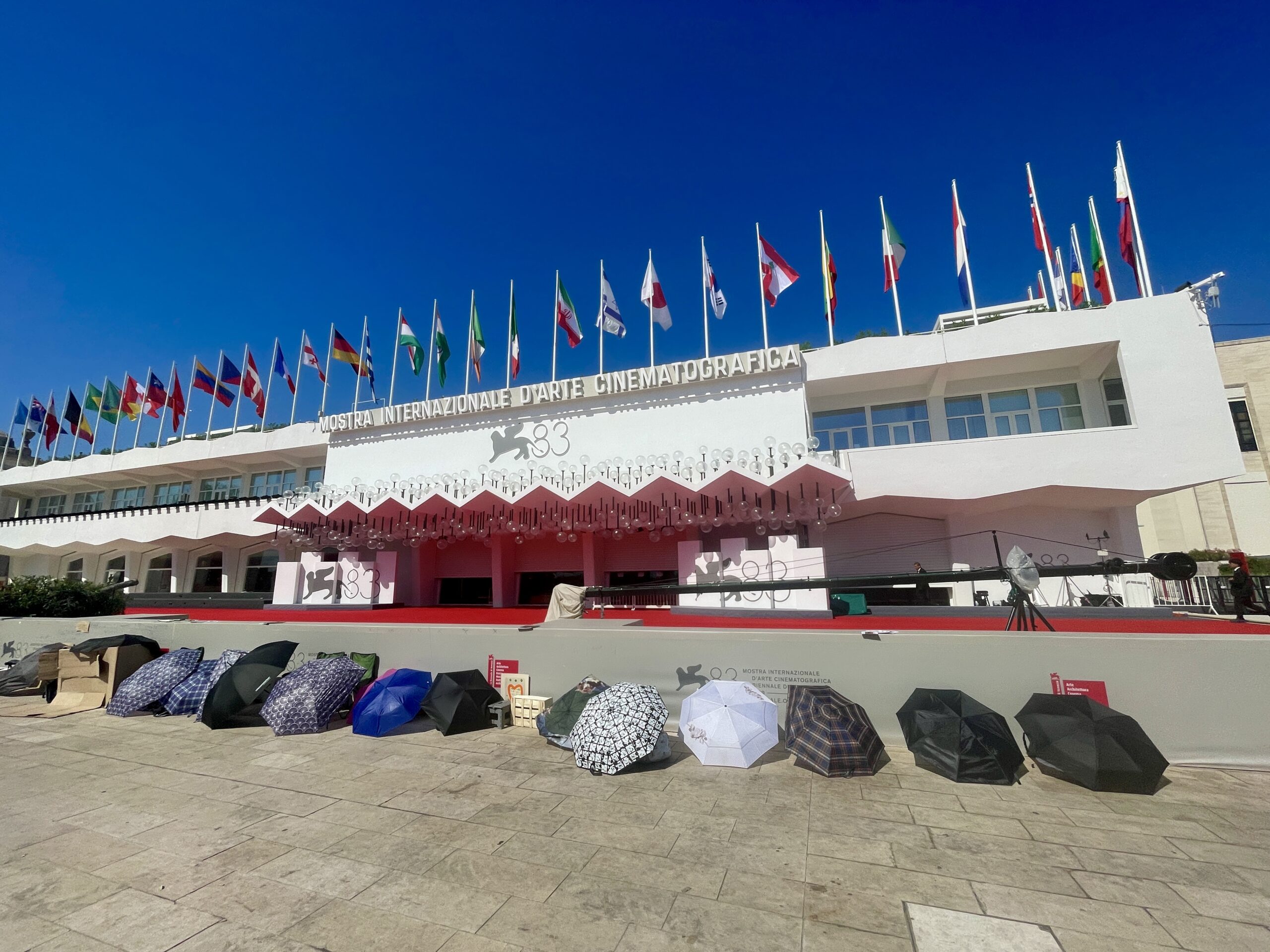
The cage isn’t necessarily just the structure of the festival. It can be the market, fame, politics, our expectations of a great filmmaker, or even the mold that cinema has gradually confined itself to. And yet, this year Venice manages, more than once, to pry that cage open — not necessarily through a single masterpiece, but through films that have each found a different way of looking at human beings and the world.
Among the films that have drawn the most attention at the festival is Martin McDonagh’s Wild Horse Nine. Reactions coming out of Venice suggest we’re dealing with one of the major works of this edition. The film returns to the years following the 1973 Chilean coup, and through John Malkovich and Sam Rockwell as two CIA agents, moves toward guilt, violence, remorse and political responsibility. A very warm reception — including a thirteen-minute standing ovation — and praise for Malkovich’s performance have already pulled the film into the awards conversation. Still, for me the film’s importance lies less in its award chances than in the very point where it fuses political history with a human moral crisis: a place where the past refuses to stay past and keeps living on in how people behave.
If McDonagh grapples with history and politics, Lee Chang-dong, in Possible Love, turns to something seemingly more personal: love, class, and the tangled dynamics between people. The Korean director’s return after eight years, since Burning, is in itself enough of a cinematic event. But for me Possible Love isn’t as brilliant as Burning; it lacks that earlier film’s mystery and elusiveness. Even so, the film seeps in gradually, pulling the relationships between its people out of any simple binary. Love here is no longer simply a bond between two people; it becomes a four-sided geometry of desire and refusal, closeness and distance, one in which social class, desire, friendship, and even the act of looking at another person are constantly shifting places. Perhaps the title itself comes from that same possibility: love is possible, but not necessarily in the shape we expect.
On another point of this spectrum, Nanni Moretti, with It Will Happen Tonight (Succederà questa notte), once again looks at relationships and the passage of time — but this time in a tone different from what we might expect of him. After years, Moretti has moved closer to a romantic melodrama, and that shift in direction could well surprise part of his audience. The story follows a relationship across years and across different cities: people who repeatedly come close to one another and then drift apart again, as if time is always a few steps ahead of them.
Where some of Moretti’s earlier work carried a certain political and social anger, here we’re faced with a filmmaker who seems to have taken refuge, instead, in emotion, loss and the passage of time. For me, Jasmine Trinca’s performance is one of the film’s real strengths, and I’d count her among the actresses deserving of this year’s Best Actress award. What makes it more interesting still is that Trinca appears in two films in Venice’s main competition this year — this one, and Paolo Strippoli’s L’estranea.
In Edoardo De Angelis’s Il fuoco che ti porti dentro (The Fire Within You), the family becomes another battlefield for the discovery of power, memory and wounds. The film centers on a son’s relationship with his mother — a relationship in which love and violence, dependence and suffering, anger and attachment are constantly intertwined. Vanessa Scalera, as the mother, creates a character impossible to judge simply: she is neither a pure victim nor merely an agent of harm. It’s precisely that moral ambiguity that pulls the film away from being a straightforward family melodrama.
Here, the family is not just a private space; it’s a place where generational difference, gender, power, memory, and even social failures have settled and sedimented. Which is why the conflict between mother and son becomes, on a deeper level, a dialogue between past and present.
Among this year’s Iranian films, Ali Asgari is in the main competition with Kami nour (A Bit of Light) — a filmmaker who began with short films and has, in recent years, become one of the notable figures of independent Iranian cinema. His new film, like some of his earlier work, follows a human situation that quickly takes on a social and political charge.
For me, the film’s strength lies more in its minimal, neorealist, and at times grotesque gaze than in characterization or performance. It may not be as convincing, formally and in its screenplay, as some of Asgari’s earlier work, but its importance lies in pulling war out of the news image and the political sphere, and transposing it onto the human psyche — into a place where death and ruin don’t happen only on the battlefield, but seep into a person, turning hope into something difficult and everyday.
But if I had to search for this gap between cage and freedom in a single film, my choice lands on a film that is, above all, about the act of building a world: Ilya Khrzhanovsky’s DAU.
© Phenomen Berlin
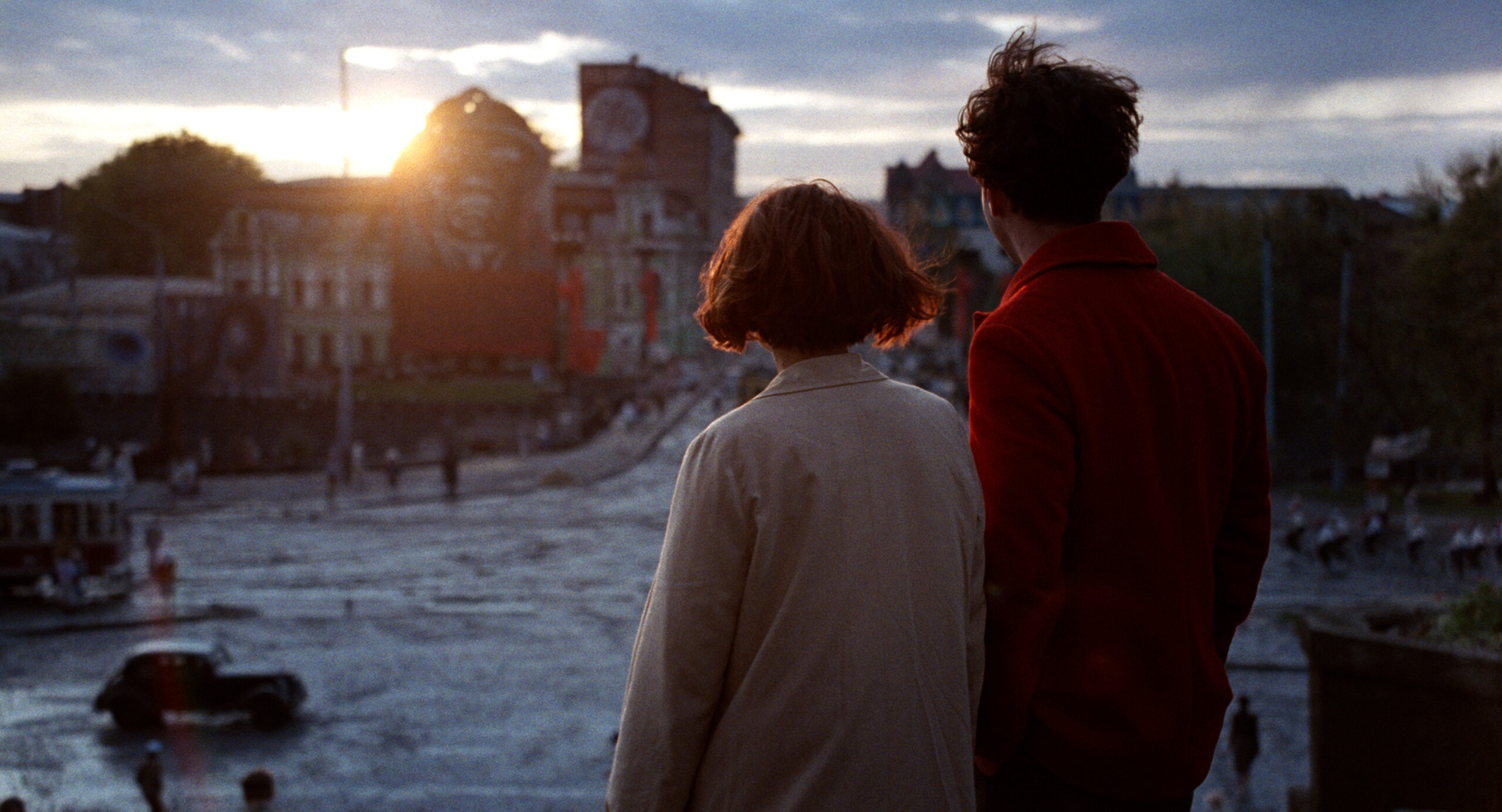
I’ve followed Khrzhanovsky for years now, including his film 4 — a filmmaker who has always been drawn to turning identity, social role and human occupation into something theatrical, and often unsettling. But DAU goes far beyond a continuation of that path. A project more than twenty years in the making, it lays before the viewer not just a story but an entire world — one in which set design, costume, makeup, performance, mise-en-scène and historical atmosphere have all fused into a single experience.
Centered on Lev Landau, the eminent Soviet physicist, the film moves toward science, power, surveillance, privilege, sexual freedom, and the intricate dynamics of human beings within structures of power. But what sets DAU apart from so many other films this edition, for me, isn’t just its subject — it’s the way its world is built.
This no longer feels like an ordinary historical reconstruction. Khrzhanovsky has built a world the viewer lives inside for a while — one that at times matters more than the narrative itself. The film’s long duration, its performances, its atmosphere, its visual detail — rather than merely telling a story, they offer the chance to experience a life. In this sense, DAU pulls itself free of cinema’s usual cage: the cage of conventional running time, of conventional narrative, of familiar characterization.
And perhaps this is exactly where DAU becomes, for me, the high point of this year’s Venice.
If DAU is the cinematic example that builds a world, Hirokazu Kore-eda’s Look Back is one that builds a bigger world out of a small one. Kore-eda, who has devoted much of his career to children, teenagers, and the intricacies of human relationships, offers here a lively adaptation of Tatsuki Fujimoto’s manga: the story of two girls who, through their shared love of drawing manga, enter a relationship of rivalry, friendship, growth and loss.
Working with children and teenagers is one of the hardest terrains in filmmaking, especially when the filmmaker has to make their psychological, emotional and physical changes over time believable. Kore-eda still has a particular gift here. Out of a small relationship between two girls, he builds a world about art, friendship, and the passage of time. The ending may not carry quite the force of the journey leading up to it, and at moments the emotion is pushed onto the image a little too hard, but Kore-eda’s skill in storytelling and directing his young actors makes the film one of the notable works in competition.
And then, right at the point where we expect cinema to return once more to story, character and world, Tsai Ming-liang slows everything down as far as it will go.
In Dust (Weichen), the extremely slow walk of a monk through the streets and spaces of San Sebastián is, for me, no longer simply a movement; it’s a form of resistance. In a world where images must be consumed ever faster, Tsai asks us to be patient. The monk, in his red robe, walks without pause — calm and focused — while the world around him moves at an entirely different speed.
People watch him, sometimes as if confronting something abnormal. But perhaps it’s the reverse: perhaps it is we who live in an abnormal world — one that has turned speed, consumption, image, and constant motion into the natural standard of life.
For me, Dust is no longer just a film; it’s a kind of philosophical awakening. Tsai Ming-liang does less to explain something to us than to make us experience the act of seeing all over again. Even the viewer’s fatigue and drowsiness become part of the experience; the film doesn’t ask us merely to watch it — it asks us to live inside its time.
Perhaps the value of this year’s Venice lies exactly in that gap: a festival where, on one side, stand the Golden Lion, the stars, the market and the hierarchy, and on the other, films still unwilling to simply settle into that order.
Some fight with history, some with family, some with love, and some even with speed.
And Tsai Ming-liang chooses another path altogether: he walks — without pause, calm and focused.
Perhaps this is still where cinema can be saved: in the moment a film, even for a few minutes, forgets its own cage.
And if I had to put forward one film from this Venice for the Golden Lion, my choice is DAU — a three-and-a-half-hour film in which the creativity of its world-building, its performances, and Khrzhanovsky’s direction have become an experience with few precedents. Whether the jury will have as much courage and appetite for risk as this film does is a question whose answer we’ll have to wait for until the closing ceremony.
Majid Movasseghi
© j:mag Tous droits réservés
