Cannes 2026: Where Everything Matters Except Discovery
Through the light drizzle of Zurich, beneath that perpetually grey sky that never quite decides whether to rain or merely threaten to, I boarded a train toward Lucerne. All the way, I stared out of the window, slowly revisiting the Cannes Film Festival in my mind—not as it appears in brochures or on red carpets, but Cannes as it really is: exhausting, breathless, filled with endless running from one screening to another, from one queue to the next, among people who still pretend cinema might somehow save the world.
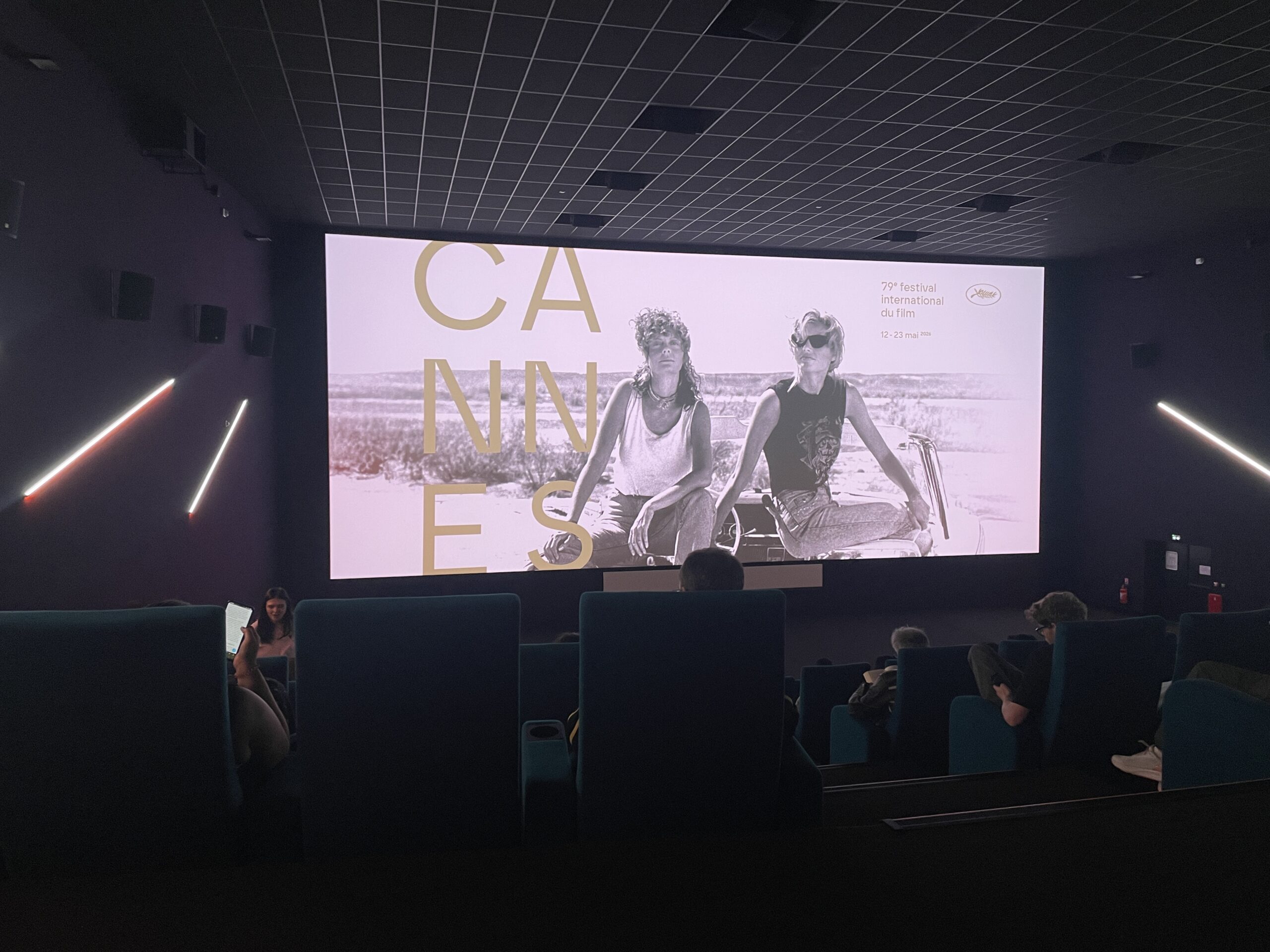
In a way, I felt satisfied with myself. I had finally managed to take time off, plan everything, and make it to those few days that, each year, take hold of the south of France like a cinematic fever. I told myself that even if most of the films turned out to be mediocre again—even if the main competition was once more filled with works shaped more by distribution politics than genuine discovery—perhaps just one good film, just one radiant moment in the darkness of a screening room, would be worth the entire journey.
The 79th Cannes Film Festival continued its familiar tradition: a space where auteur cinema, stardom, and aesthetic competition converge. In the main competition, many films seemed less concerned with classical storytelling and more preoccupied with crises of meaning, the collapse of human relationships, and the representation of ethics in the contemporary world. Meanwhile, the Un Certain Regard section once again functioned as a laboratory for the cinema of the future—a place for unstable forms, fractured narratives, and experiments attempting to reinvent cinematic language.
I kept thinking about the years when I would run from one screening to another, my face soaked in sweat, a ticket stub in my pocket, constantly checking my schedule with that familiar anxiety of arriving a few minutes too late and finding the doors already closed. Cannes is less a festival than a kind of magnificent exhaustion—a marathon between light and fatigue.
A driver from BlaBlaCar was supposed to pick me up in Lucerne and take me to Nice. Everything had been carefully planned, until suddenly a message arrived: “I’ll be an hour and a half late.” Then he added that he had no internet connection. That hour and a half turned into two hours suspended in a cold station. Every few minutes, I checked my phone. Eventually, the driver called through one of the passengers: “We’ve arrived.”
On the road, for a moment, my heart sank. I felt I might lose everything. Maybe I wouldn’t make it. Maybe the journey would end before it had even begun. The driver was polite, but his delay cast a shadow over the entire trip. When we reached Nice, he casually said he would drop me somewhere near his own destination. That was when exhaustion turned into protest. I said, “Wait. You were two and a half hours late. I’m not here for leisure. I’m a filmmaker, I have journalistic work, I have plans. It makes no sense to leave me in the middle of the city.” In the end, I convinced him to drop me near the main station—the place where the festival shuttles depart for Cannes.
And then, finally, Cannes.
Exhausted, sleep-deprived, with a body that still felt stranded on the road, I entered the screening room. That familiar murmur of the crowd. The slow dimming of the lights. The moment the screen lights up and, for a few seconds, you once again believe cinema might still be a kind of magic.
But reality revealed itself quickly.
Once again, mostly mediocre films—works whose inclusion in the main competition is difficult to understand. Of course, there were major names this year: among the 22 films in the main competition, only Fjord by Cristian Mungiu caught my attention with a distinct vision, especially its socially critical undertones (Editor’s note: Written before the film was awarded the Palme d’Or.). László Nemes, with his film Moulin, and its striking 35mm cinematography, evoked the unforgettable Army of Shadows by Jean-Pierre Melville. The Hungarian Oscar-winning filmmaker succeeded in direction, mise-en-scène, atmosphere, and working with actors; Gilles Lellouche, in particular, delivered one of the standout performances of the festival.
Asghar Farhadi, the Iranian filmmaker and two-time Oscar winner, appeared far from his former glory. His ambitious adaptation of Kieślowski’s Dekalog—especially A Short Film about Love—, Parallel Tales, was burdened by an excess of star power that it could not properly contain. The overall weakness of the remaining competition films also came as a surprise in this edition of the festival.
The issue is not only the quality of the films. The issue is that Cannes, for years now, has ceased to be merely a film festival and has become a field of power balance—between cultural policy, distribution markets, capital, branding, and relationships. Even Thierry Frémaux once said, somewhat ironically, that they sometimes select films they do not necessarily love, but whose presence is “necessary.”
And perhaps this very notion of “necessity” is the most dangerous sentence for cinema.
Because cinema dies precisely at the moment when no one is willing to take risks for its discovery anymore.
Majid Movasseghi
j:mag Tous droits réservés
